Showing posts with label Summer Reading. Show all posts

Saturday, June 20, 2015

Summer Goals Update

It turns out I can't balance work, volunteering, three weekly blog posts, a healthy lifestyle, and fiction writing. Go figure. I'm human, and my track record for balancing multiple things isn't great. I suspected this day would come, once I started my job. So I'm going to remove the column status for Summer Viewing and Summer Reading. When I have time, energy, and the material to write such posts, I'll do so. When I don't, I won't even bother with a Swamped post.

Anyway, here's an update on my reading, viewing, writing, etc. goals:

Summer Viewing: I still haven't continued Free! Eternal Summer. I plan to... but that's work to watch. I have to think in order to appreciate it, since appreciating it doesn't come naturally. I'm fairly caught up with all current sports anime—just a couple weeks behind on Daiya no Ace—and with Ore Monogatari. I'm also re-watching Hunter x Hunter (2011). Innocent Gon makes me smile, but when I think of what he goes through later... it's bittersweet.

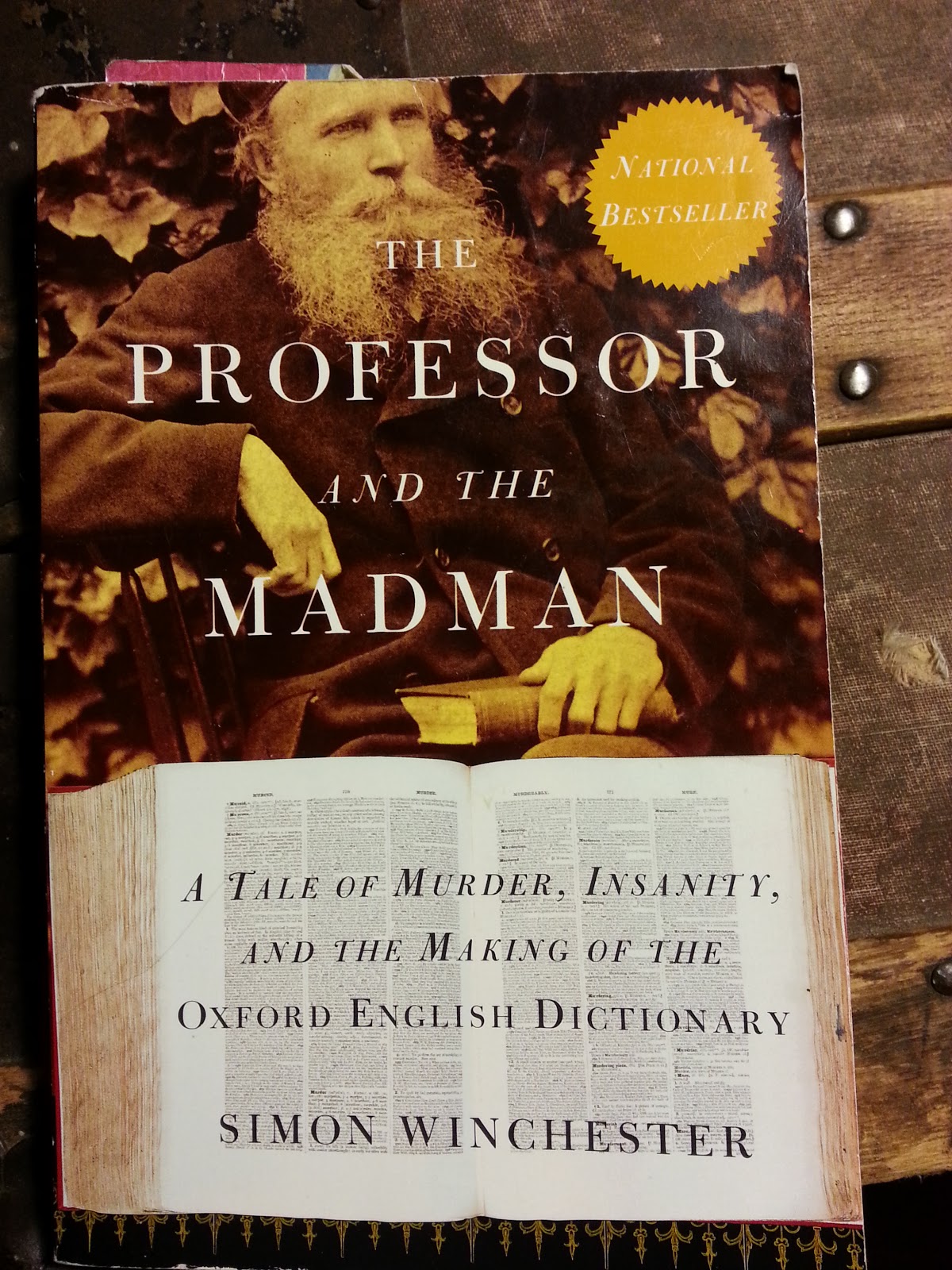
Summer Reading: I'm still working on The Professor and the Madman. There were several pages, maybe a chapter, dedicated to the history of dictionaries. Yeah, it's pretty fun. No, that wasn't sarcastic.

Blogging: See first paragraph. But my column at Beneath the Tangles is going strong.

Fiction: I was supposed to start revising my screenplay at the beginning of this week. I haven't touched it. I have, however, started brainstorming new story ideas... barely. Yeah, this is one reason I'm letting go of some blogging.

Work: I scoop a lot of ice cream, make a lot of milkshakes... my right wrist was starting to make me nervous with twinges, but I've been careful, and I think it will be fine.

Volunteering: I'm over halfway done with the 120 hours I needed this summer!

Fixing sleep pattern: hahahahahaha... I keep saying it will happen, but nope. And I accepted a coffee from my coworker earlier this evening... whoops. At this rate, next semester's 9:00 am classes are going to be really, really hard for me. I know I have over two months to change, but still...

So yeah. That's what I've been up to. I knew my goals were a bit too lofty, but it was worth a shot. I'll probably drop in for Summer Reading and Viewing posts from time to time—just not weekly anymore. 

Thanks for reading! I hope your summers are going well. I know for some of you, it's probably just started. 

Wednesday, June 10, 2015

Summer Reading: The Professor and the Madman (ch. 1-2)

I've been volunteering in a thrift store's book section. Amazingly, I've only bought two three books (the number changed after I started this post) and brought home several free ones. One of them is The Professor and the Madman: A Tale of Murder, Insanity, and the Making of the Oxford English Dictionary by Simon Winchester. Can you guess which part of the title caught my attention? Here's a hint: I'm an English major.

I think Winchester has spent too much time reading the Oxford English Dictionary (referred to as the OED from here on out), because he uses a lot of unfamiliar words. Seriously. I've been reading on the college level since long before college, and I do as much of the assigned reading as possible. My vocabulary isn't shabby. But Winchester throws in words like "louche" and "garroting" like everyone should know them.

louche: disreputable or sordid in a rakishly appealing way

garroting: present participle of "garrote," meaning to kill someone by strangulation, typically with a wire, cord, or iron collar

I've only read two chapters so far. The first begins with an excerpt of the OED's entry for "murder." It covers the incident that landed Dr. WC Minor in an asylum for the criminally insane. The second chapter has two epigraphs, excerpted from the entries for polymath ("A person of much or varied learning; one acquainted with various subjects of study") and philology ("Love of learning and literature; the study of literature, in a wide sense, including grammar, literary criticism and interpretation, the relation of literature and written records to history, etc.; literary or classical scholarship; polite learning"). This chapter focuses on Professor James Murray's life before his work as the lead editor of the OED. Murray didn't have much of a formal education, but he loved learning... to call him a "polymath" who learned for the sake of "philology" is an understatement. He was a nerd. The book doesn't say "nerd," of course. But in today's lingo, that's the best way to describe him. He knew Latin, of course. But he varied from fluent to familiar with all the Romance languages, as well as Dutch, Flemish, German, Danish. And he was quite capable in the realm of Anglo-Saxon and Moeso-Gothic as well. All that before he got higher education. If he lived 100 years later, I bet he'd be a Tolkien fan, fluent in Elvish and all derivatives, including the tongue of Mordor.

The second chapter also paused to recount the "protagonist" definition controversy. The OED said there could be multiple protagonists. In 1926, Fowler's Modern English Usage declared that "protagonist" could only be singular, and any instance of plural was absurd. The OED settled the matter over fifty years later, confirming that protagonist can, in fact, be pluralized. That's a relief, because The Professor and the Madman has two protagonists, as the title indicates.

I'm sensing that this author is a bit of a nerd, too. I'm a little out of my depth. It's like saying, "I'm a Naruto fan!" then meeting someone who knows a dozen jutsu hand signs and all the characters' names. Except with the English language.

This isn't as enjoyable as, say, a fantasy novel. But I still like it, and I'll keep puttering through it over the next week or two.

---
P.S.: I referenced the OED in two of last year's posts. I wrote about the origins of the words "geek" and "nerd." Thought it would be appropriate to link to those here, especially since they came from the homework assignment that introduced me to the OED.

Wednesday, June 3, 2015

Summer Reading: Pause for Script-reading, Writing, and Work

I've mentioned that my summer reading list includes my classmates' plays and screenplays. As of today, I've finally finished... one. I was introduced to these characters in class, so I'm glad I finally found out what happened to them. And the screenwriter/classmate did not to take the cruelest course, so I only got a little teary (if you're reading this, friend, thank you for having mercy). She put the main character through some rough stuff.

My friends and I have decided that our creative writing education teaches us to kill and cause emotional trauma. We can be kind of mean to each other. There's another screenplay waiting in my inbox that I know will make me pout, because we already read a death scene in class.

I think I can read one more script tonight, or at least get a good start...

My other excuses for not reading an actual book this week:

  • I started my summer job last Thursday. I still have my volunteering, too.
  • I've spent time writing. I'm brainstorming my next big writing project. I have to hurry. I only have a couple weeks of freedom in which to solidify a new idea. Then, I start revising the draft I finished last week. I need to prioritize that, so I can make serious progress before school resumes.
  • Monday's blog post took several hours... okay, so it always takes a fair amount of time. But this one was different. Instead of writing about a single anime, I addressed why critical thinking is vital for anime fans. It took longer than I expected.
Oh, but I did crack open a book about the Oxford English Dictionary's first editor and one of the key contributing writers. Apparently, this key writer did his work from an insane asylum. So that's interesting. Also, the epigraph to the first chapter was the OED entry for "murder" (or at least part of the entry—some of those entries are really, really long). This is going to be a fun read.

For those of you who aren't English majors: the OED is an extremely comprehensive dictionary that takes up several volumes (thankfully, there's an online version that I have access to during the school year). Definitions include the words' origins, how they've evolved, and more. If I remember right, the entry for "if" spanned more than a page.

Yes, I'm a nerd. But you knew that already.

Thank you for taking the time to read my rambles. My posts on this blog are increasingly low priority. Sorry about that. I might read the OED book and more Harry Potter by next week. Or I might choose to focus on these scripts. Either way, I'll check in.

Wednesday, May 27, 2015

Summer Reading: The Wise Man's Fear

Last week, I said I should avoid reading until I finished my screenplay. But when I can borrow library eBooks without leaving my couch, the temptation can be overwhelming. So I did things backward: I borrowed Patrick Rothfuss's The Wise Man's Fear, finished all 1000 pages by Sunday night, and then finished my screenplay. 

The Wise Man's Fear is the second book in the Kingkiller Chronicle and the sequel to The Name of the Wind. In this one, Kvothe finally travels far beyond the University, which means we learn more about the world Rothfuss has created. This includes...

... Adem mercenaries and their country
... Fairies, and not the cute kind (finally! we knew they were part of the story, because Bast is in the inn, but we didn't know at what point Kvothe started to believe in them)
... other cultures and languages

I should probably warn you that Kvothe didn't just learn the language, politics, and favored fighting styles of the cultures he visited; he also learned their views on sex... first hand. I sort of skimmed through those parts. I wouldn't say they were extremely explicit, but I wouldn't recommend it to my more sensitive teenage self, either. 

I personally think the book wouldn't be hurt if those scenes were shaved down to something more PG. But the discussions about sex on a cultural level were interesting—Kvothe came from a more conservative culture than some that he visited. Meanwhile, here in the real word, conservative and liberal subcultures are at odds about sex, reproduction, and surrounding issues. The Wise Man's Fear may be an epic fantasy, but it's definitely a product of its time. 

Since I fall on the more conservative side of the spectrum (for a more complex reason than "because the Bible says sex outside of marriage is a no-go," though God's Word would be reason enough), I could get too annoyed about Kvothe's... adventures and miss out on the story. Instead, I enjoy the insight into a decidedly non-Christian perspective. Don't misunderstand: I know that the characters' actions and words do not always represent the author's beliefs. The characters themselves disagree with each other. But I've stopped by Rothfuss's blog, and as much as I enjoy his writing, I won't be putting his posts on my church's overhead projector.

It's almost midnight PST, so I'd better wrap this up: I still love the Kingkiller Chronicles, and I look forward to the third book. There is a shorter, related book about one of the Kvothe's friends, and I'll probably pick that up this summer. But other than that, I'll just wait patiently for Day Three of Kvothe's storytelling.

Wednesday, May 20, 2015

Summer Reading: Harry Potter 2 & 3

This will be a quick post. I've been really busy with volunteering (required for graduation) and applying to jobs. I needed to take tonight to just rest. And I really should stop myself from reading much more until I finish this draft of my screenplay. I "only" have to finish the resolution, but I'm guessing that means at least ten more pages (I'm already past 130!), and the procrastination has been awful.

I did less reading in the past week: just Harry Potter and the Chamber of Secrets, followed by Harry Potter and the Prisoner of Azkaban, which I'm close to finishing.

A few notes:

Yes, The Prisoner of Azkaban includes divination. I'm not particularly offended. I don't think Rowling is advocating divination—it's just part of the magic in the world she's created.

I'm still enjoying the Harry Potter books. They are a little formulatic, like a TV series: Harry starts the new school year, meets the new Defense from the Dark Arts teacher, clashes with Malfoy and Snape, plays Quidditch, learns a little more about Voldemart and his parents, and somehow solves a mystery that the adults couldn't solve themselves. 

That's all I'm going to say, because it's almost past my deadline. Hopefully next week's post will be longer... and hopefully my screenplay will be done, so I can let myself read more. 

Wednesday, May 13, 2015

The Name of the Wind (finished) and Harry Potter (Years 1-1.3)

This is the second post in my "Summer Reading" column—the post title is too long without including the column title, so I think I'll leave it out from now on.

I'm loving this reading-for-fun thing. The bookworm within me needed only a little encouragement to come out from her cave. Before I knew it, I was staying up all night and letting books distract me from responsibilities. In the past week, I think I've read almost 900 pages. Five years ago, that wouldn't have been a big deal, but that was before anime distracted me. Since then, I've only read a few just-for-fun books each year. I forgot how these pages can consume me. At 4:00 am, I can still be saying, "I'm not sleepy yet. Just one more page... and another... and another..." It's worse than YouTube videos.

Anyway, this week's titles are The Name of the Wind and the ever-so-controversial Harry Potter and the Sorcerer's Stone. I've also begun Harry Potter and the Chamber of Secrets.
This would be a much better picture if I had The Name of the Wind
in print. But I would have had to request it from another branch in
our library system, and then wait. So I borrowed it via Kindle instead.

I finished reading The Name of the Wind by Patrick Rothfuss a few days ago. It was even better than I remembered. In addition to what I talked about last week, here are a few more elements I enjoyed:

- The Name of the Wind begins in third person, following the activities in the Waystone Inn. Then, as Kvothe tells his own story, the majority is in first person. Every now and then, he pauses his story, and we enjoy another chapter in third person. This arrangement enhances the intrigue. Kvothe's adventures clearly changed him, and we still don't know exactly how.

- On a similar note, Kvothe makes an entertaining, interactive storyteller. Every now and then, he'll make a comment like, "If you're not a musician, I don't expect you to understand." When he says such things, I'm pulled back into the Waystone Inn for a moment, where I sit next to the Chronicler and Bast, listening to Kvothe tell his tale.

- The magic in The Name of the Wind often draws from science. For example, Kvothe occasionally mentions that energy can neither be created nor destroyed—a law that my Physical Science professor mentioned a few dozen times last semester.

- The poetic epilogue mirrors the prologue. It's not exactly the same, but it shares its rhythm and several lines.

Now, I can't say I love every aspect of The Name of the Wind. I feel obligated to give a disclaimer: there's sexual innuendo, and it's clearly not written from a Christian worldview. Rothfuss's approach to his world's mythology is particularly interesting. He's developed myths that draw a bit from Christianity. Some stories about the great Tehlu remind me a lot of Jesus' life on Earth, though Tehlu's mercy and justice aren't nearly as magnificently executed. (No, I won't go into the details... you know that if I start, this post will become 1,000 words longer, and I don't have time for that. But if you've read this book, please feel free to comment about it.) In addition to the basic myths, there are superstitions. And the main character, Kvothe, is very skeptical about much of it.

The Name of the Wind is only the first in the series. Kvothe will take three days to tell his story, and this book was only the first day's worth. The second book is already out, and I plan to request it at the library soon. I think Rothfuss is still working on the third book, but there is another, smaller, related book already out about one of the side characters—of course, I plan to read that this summer, too. All-in-all, Rothfuss has developed an interesting world populated with interesting characters, and I definitely recommend it to fans of fantasy.

Now, onto the second topic of the week: Harry Potter. Some of you might be thinking: "Wow, Annalyn. Are you sure? I mean, that anime stuff is suspicious enough, but Harry Potter? I heard that good and bad get mixed up in that series. And that it promotes real witchcraft. And other stuff."

Okay, I'm not exactly a Harry Potter expert. My parents didn't explicitly ban me from reading them when I was young. If I'd asked, I'm sure Dad would have given them a read and then let me at 'em. But I knew some of my friends weren't allowed to read it, so I didn't push the matter. Now, as a young adult, I'm starting to feel woefully uninformed. I'm a creative writing student who loves fantasy, and who has ties to various nerdy communities. One of my literature professors has made connections between Harry Potter and a book we read for class. I was one of few who has neither read them nor sat down to watch all the movies (though I think I've seen all or most of them at various points, mostly over my cousins' shoulders when I was living with them).

For the accusations about morality: uh... sorry, but everyone I've talked to who's actually followed the entire series seems to disagree. You'd have a much better case against Pirates of the Caribbean.

For the quibbling about witchcraft and other religious matters: Go with your conscience with this one. But from what I've seen and read, the magic in the HP series has very little to do with real Wiccan or occult practices. And J.K. Rowling has repeatedly said that she is a Christian. Granted, she's no conservative. A quick glance at quotes on Wikipedia suggests she and I wouldn't see eye-to-eye on a few religious matters. But she most certainly isn't Wiccan (contrary to one rumor that I heard years ago).

Now, a quick note on the books themselves: Sorcerer's Stone was fun.  (Yes, I know it should be called Harry Potter and the Philosopher's Stone, and American publishers changed it. Since I'm already acquainted with alchemy and the philosopher's stone, thanks to Fullmetal Alchemist, the changed wording annoys me. But whatever.) It has a whimsical, story time feel. The Dursleys are absurdly cruel. I have to suspend my disbelief for them and for unreasonable teachers more than I do for the magic itself. I enjoy the world Rowling has created with wizards and muggles and their interactions.  I worried that I'd find it lacking, since I just finished The Name of the Wind, but it's plenty entertaining.

I started the second book, Harry Potter and the Chamber of Secrets, this evening. It, too, is entertaining. There's a bit too much recap of the first book for my taste, as if Rowling expected some readers to pick it up without reading its predecessor. But that's a minor annoyance. Unless I have some self-control, I might finish this tonight.

Next on my reading agenda: the sequels to the two series mentioned herein. I probably should pick up one of the non-fictions on my To Read pile, too. Also, the plays and screenplays my Play Writing classmates are sending to me—of course, I won't write about those here. Actually, I need to finish my own screenplay... I think I'll be the last one to send mine out. I should probably set aside reading for a bit and work on writing instead.

Have you read The Name of the Wind or Harry Potter? What do you think of them?

Wednesday, May 6, 2015

Summer Reading: The Name of the Wind (Ch. 1-6)

In yesterday's post, I told you about two summer blog columns: one for books, and one for anime. Both will be casual, much like my Rewind posts. I'm starting these summer columns to keep me accountable. But I hope you'll enjoy them, too. Maybe you'll decide to check out one of the books I'm reading... or maybe you know of a book I absolutely must bump up on my priority list.

~

I'm starting with Patrick Rothfuss's The Name of the Wind—The Kingkiller Chronicle Day One.  I read it several years ago, before the sequels came out, and I loved it for the fun, excitement, and fantasy. Now, I'm reading it with a new level of appreciation. Literature classes have taught me to slow down and enjoy descriptions, to delight in wording and unique metaphors. Writing classes have taught me to notice voice and perspective, to think about pacing and characters. Last time I read The Name of the Wind, I didn't notice the details. I forgot entirely about the first six chapters. I don't think I'll forget again.

The descriptions and wording in general make me happy. Look at the first two sentences:
"It was night again. The Waystone Inn lay in silence, and it was a silence of three parts."
Rothfuss spends the short prologue describing the three parts, and it's rather poetic. I'm certain some elements of it are symbolic, but this is not a school paper, so I'll refrain from delving too deep. Instead, I'll skip to the prologue's last sentence. "It" refers to the third silence:
"It was the patient, cut-flower sound of a man who is waiting to die."
Whoosh. What a way to end that beautiful prologue! But the man to whom the third silence belongs is still young. His hair is "red as flame." Why would he be "waiting to die"? This is the first of many questions to cross my mind.

In the first six chapters, we learn a little bit about the main character, known in the town Newarre (wait... "no where"? "New war"? Both? Hmm...) as "Kote": He has owned the Waystone Inn for about a year, and he's careful to keep the appearance of a "simple innkeeper." He's younger than thirty, but his experience makes him old, and he already has a student (who clearly comes from his pre-innkeeper days). His red hair and green eyes get brighter and dimmer. He has experience fighting nasty creatures that the smalltown folk would call "demons." It seems obvious that he is the "Kingkiller" mentioned in the book series' name. But he won't admit anything directly for almost 50 pages.

Then, the Chronicler comes to town. He wasn't sure if he'd find the legendary man, but he came anyway, hoping to collect the story of Kvothe the Bloodless. At first, Kote refuses. He's a little angry. Chronicler could be putting him in danger, could reveal his identity and location. And his story apparently includes quite a bit of pain. But Chronicler is persuasive. Kote/Kvothe finally agrees, but on his terms: he will take three days to tell the story, starting the next morning.

At the end of Chapter Six: "The Price of Remembering," a change occurs. Chronicler muses about Kote's unusual terms and explains them by saying, "You are Kvothe." After that, "the man who called himself Kote" smiled, and "a spark was kindling behind his eyes. He seemed taller." From then on, "Kote" is Kvothe.

Names are important in The Name of the Wind—important to the main character, to the author, and thus to the readers. Kvothe chose the name "Kote" very carefully when he came to Newarre. I don't know what it means, and Behindthename.com was of no help, but hopefully I'll eventually learn its significance. But the names of things are important, too. Knowing something's name allows one to command it. I don't know the details yet.

So far, the narration has been third person limited, almost third person dramatic at times. The narrator occasionally gives insight to characters' thoughts, but not word-for-word. And often, the action plays out like a movie, and we must interpret the images without hearing the characters' inner thoughts. The effect is just removed enough to be mysterious, but it's also inviting, warm. It seems to say, "If you stick around this inn for a while, I'll get that innkeeper to open up. Then you'll hear a better story than his patrons have ever told."

Kvothe starts telling his story in Chapter 7, which I am about to read. This is where the real tale begins.

~

Coming up on my reading list:
- Finish The Name of the Wind
- The first two Harry Potter Books (I reserved them at the library, so they have to be next)
- The next installment of The Kingkiller Chronicle.
- A non-fiction... maybe I'll start with The Abolition of Man by C.S. Lewis. It's thin—a good warm-up book.

Have you read The Name of the Wind? Did you take time to notice all the cool images and descriptions? If you haven't, I hope you'll add it to your summer reading list. Then we can have fun talking about it together.